Pages

Saturday, December 17, 2016

Prologue and Epilogue—Do They Have a Use? By Connie Vines RR# 12/17/16

Victoria Chatham suggested this topic: Prologue and Epilogue. Do they have a use? Should they be used? Can you have one without the other? This topic was suggested by one of our group, Victoria Chatham. Be sure to check out her blog.  


pro·logue ˈprōˌlôɡ/
noun
1.     a separate introductory section of a literary or musical work.
"this idea is outlined in the prologue"

It’s an interesting topic. While critique partners and other authors seem to ponder the pros and cons, frequently.  I’ve used both in my historical and romantic suspense novels.  While my contemporary romance novels have an epilogue so that my readers know it truly is a happily-ever-after story.
My prologues are short and to the point.  I have an action event that sets the tone of my romantic suspense novel.  I find this effective because it doesn’t leave ‘dead time’ so to speak.  I can hop into the action/ skip ahead in time/ or open my story the a different POV.

However, a writer must be selective, I believe.  You need to make certain that your story still opens with an inciting moment, perhaps for the hero (Brede, Rodeo Romance, Book 2).  Or to set a historical tone for a novel (Whisper upon the Water).  Does the prologue change the story?  I use my prologue to intensify the emotional connect between my character(s) and my readers.

ep·i·logueˈepəˌlôɡ,ˈepəˌläɡ/
noun
1. a section or speech at the end of a book or play that serves as a comment on or a conclusion to what has happened.


Epilogues tie up all the loose ends.   I like to jump forward and show a wedding or have a toddler in the picture.  The reader is satisfied, knowing all is well in.  Isn’t that what stories are all about?
I also make use of diaries; which, in my experience, editors seem to love or hate.  Though in a contemporary novel, I suppose, I would make use of email, twitter, and blog/snapchat.
So, I am pro epilogue, pro prologue.  And, I am also, pro Oxford comma!

Happy Holidays!


Connie Vines

Please Blog Hop and see what these participants have to say:

Margaret Fieland http://margaretfieland.wordpress.com
Skye Taylor http://www.skye-writer.com/blogging_by_the_sea
Dr. Bob Rich http://wp.me/p3Xihq-QS
Marci Baun  http://www.marcibaun.com/blog/
A.J. Maguire  http://ajmaguire.wordpress.com/http://ajmaguire.wordpress.com/
Victoria Chatham http://victoriachatham.blogspot.ca
Anne Stenhouse  http://annestenhousenovelist.wordpress.com/
Helena Fairfax http://www.helenafairfax.com
Beverley Bateman http://beverleybateman.blogspot.ca/
Rachael Kosinski http://rachaelkosinski.weebly.com/
Kay Sisk http://kaysisk.blogspot.com
Rhobin Courtright http://www.rhobinleecourtright.com

Sunday, November 20, 2016

NaNoWriMo, National Novel Writing Month by Connie Vines

National Novel Writing Month (often shortened to NaNoWriMo, "na-noh-RY-moh"), is an annual Internet-based creative writing project that takes place during the month of November.


National Novel Writing Month (NaNoWriMo) is a fun, seat-of-your-pants approach to creative writing. On November 1, participants begin working towards the goal of writing a 50,000-word novel by 11:59 PM on November 30.

To win you must write a 50,000 word novel—from scratch—in one month. To break it up, you have to write 1,667 words a day, every day, for thirty days straight.

That’s a lot of words. If you’re participating in NaNoWriMo this year, how do you win? Here are five suggestions.


1. Write With Friends

Community can provide positive reinforcement.  I belong to Romance Writers Of America and my Orange County Chapter and others have this contest every year.


2. Write Fast

Today, writing fast is the most important thing you can do. Quantity begets quality, so write quickly today.

3. Don’t Edit

Editing is essential. Don’t be one of those writers who submits their unedited NaNoWriMo novel to publishers on December 1. But November isn’t for editing. November is for writing. The Oxford Comma and misuse of your/you’re  can wait for December.

4. Use a Timer

Your inner procrastinator may try to convince you otherwise, but there are only so many hours in November. Spend your time wisely by using a timer.

Set it for thirty minutes and see how many words you can write. Take a five minute break. Then, set it for another thirty minutes and see if you can beat your word count from last time.

5. This Isn’t Just About 50,000 Words

This is about mastering the craft of writing. Intrinsic motivation is always more powerful than extrinsic rewards, and becoming a master at something like writing is intrinsically good.

Every time you feel your energy flagging and procrastination taking over, ask yourself, “How can I get better today? What can I do to become a great writer today?”

Are you participating in NaNoWriMo? Please post a comment and let me know how you are doing. If you have any writing tips, please share.

I must confess that my day job prevents me (yes, it is an excuse) from meeting my daily word count. UNLESS unless I am writing a novella (this year's personal challenge), or a YA novel.  I know this keeps from participating in an actual contest but that isn't my real reason for participating.  I participate to complete my stories.

Happy Writing!

Connie

Please visit our Sunday Snippets Blog Hop members:

http://yesterrdayrevisitedhere.blogspot.com/
http://mizging.blogspot.com/
http://triciamg.blogspot.com/


Sunday, October 30, 2016

Halloween for Skittish People by Connie Vines

We all know my Zombies (Here Today, Zombie Tomorrow) are not The Walking Death type of
Zombies.  Everyone who has attended my yearly Spooktacular Dinner, know it’s not at guts-and-gore type affair.  I’m not a scared cat, exactly.  I simply have the gift of a very vivid imagination.  The type of imagination that produces a nightmare when I watch “Meerkat  Manor”, “Fantasia”, or any war movie.

So what movies are recommended for skittish people?

1. Hocus Pocus
2. The Addams Family
3.  It's The Great Pumpkin, Charlie Brown
4. Ghostbusters
5. Frankenweenie
6. Halloweentown
7. The Nightmare Before Christmas
8. Little Shop of Horrors

What move do I always watch?  It’s The Great Pumpkin, Charlie Brown.  I love, love this movie.  Snoopy in the pumpkin patch always makes me smile.

What Halloween movie is your favorite?  What movie frightens you out of your wits?  What movie give you nightmares?

Well, Frankenweenie did it for me.  With The Nightmare Before Christmas came in a close second in the ‘giving Connie a nightmare’ category.

The crazy thing is, I can read and re-read the novel Dracula by Braun Stoker and watch the 1990’s movie version of Dracula and I am fine.  (Dracula, like The Phantom of the Opera, falls under the umbrella of tortured hero and love story –in my mind anyway).

I’ve posted pictures of a few party ideas and treats I’d like to share. (visit my Pinterest Boards: novelsbyconniev).


Please ‘treat’ yourself to a book from BWL this Halloween!  Remember to visit the other member of out weekly Blog Hop!


Order Connie's Books HERE!

http://yesterrdayrevisitedhere.blogspot.com/
http://mizging.blogspot.com/
http://triciamg.blogspot.com/

Saturday, October 22, 2016

How Important is a Title? # 10/23/16 Round Rhobin

Topic: How important is a title? What attracts you to a certain title, and how do you determine what to title your book? 

Thank you Rhobin for another excellent topic!

I believe the  title of your book is–by far–the most important book marketing decision you’ll make.

 There’s little good guidance out there on the right way to think about titling your book. The few blogs that address this decision offer advice that is:

Trite – “Go with your gut!”
Superficial – “Browse bookstores for ideas!”
Actively harmful information – “Don’t spend too much time on it.”
They’re all wrong.

Just like companies spend millions on naming new products, and blogs spend hours testing different titles for their posts, you should spend serious time and energy finding the right book title.

This is a very important decision, one you need to think about and get right to ensure your book has the best possible chance of success.

Debbie Macomber, New York Times Bestselling Author, has spoken a number of times at The Orange County Chapter of Romance Writers meetings (I am a long time member).  When Debbie was writing serial romances for Harlequin/Silhouette she came up with her book titles by reading the names of race horses in the Sunday Newspaper.

Janet Daily, 1944 - 2013, began her writing career also writing for Harlequin Romance.  She set each one of her novels in an U.S.A. state.  Each title was often the state's motto.


Why Do Book Titles Matter?

The title is the first piece of information someone gets about your book, and it often forms the reader’s judgment about your book.

Let’s be clear about this: A good title won’t make your book do well. But a bad title will almost certainly prevent it from doing well.

Based on loads of empirical research and our decades of experience in the book business, we have a pretty clear picture of what happens in the mind of a potential reader when evaluating a book. They consider these pieces of information about a book, in this order (assuming they come across it randomly in a bookstore or browsing on the internet):

The title of the book
The cover of the book
The back cover copy (the book description copy, if it’s online)
The flap copy (or the reviews, if it’s online)
The author bio (depending on where it is)
The book text itself (or they use the “see inside” function to read a few paragraphs)
The price

The title is the first thing the reader sees or hears about your book–even before the cover in most cases–and getting your title right is possibly the most important single book marketing decision you’ll make (even though most people don’t think about it as marketing).

The 5 Attributes Of Good Book Titles

A good title should have all of these attributes:

Attention Grabbing
Memorable
Informative (gives idea of what book is about)
Easy to say
Not embarrassing or problematic for someone to say aloud to their friends
Attention Grabbing

This should be pretty obvious. There are a million things pulling on people’s attention, and you need a title that stands out. A bad title is one that’s boring, or seems boring.

There are many ways to grab attention; you can be provocative, controversial, exciting, you can make a promise, etc. The point is your title should make people stop and pay attention to it.

Remember, a book title is not only the first thing a reader hears about your book, it’s the one piece of information that a reader has that leads them back to the book itself. If your book is recommended to them by a friend, and they can’t remember the title, then they can’t go find it in a bookstore or on Amazon.

A good test is to ask yourself this question:

If you were to tell someone the title of your book at a party, would they have to ask what it’s about?
If so, that’s probably a bad title.

Also, don’t out-think yourself on your title.

By using a word or phrase that is either not immediately understandable by your desired audience, or doesn’t convey the point of the book, you are putting a huge obstacle in front of your success.

Easy To Say

 Tongue twisters and hard to say phrases reduce the likelihood that people will engage the book or say it out loud to other people.

This is a concept called cognitive fluency–to make it simple, it means that people are more likely to remember and respond favorably to words and phrases they can immediately understand and pronounce. We don’t want to go too far into the psychological explanations here, but the point is this: Don’t try to be too sophisticated at the risk of becoming obscure. It will only hurt your book.

Step 2: Brainstorm

This step is simple.

Spend at least a few days writing down every single title idea you can think of.

Telling someone to brainstorm is like telling someone to “be creative,” meaning that it’s not an easy thing to describe. That being said, we will will list every possible way we know of to find a good book title, complete with examples (remember, these techniques are not just for your main title, they will be the basis for your subtitles as well).

Use clever or noteworthy phrases from the book: This is very common in fiction, and can work well with novels. It also works well with non-fiction books, where the concept of the book can be summed up quickly or with one phrase.

Examples

The Black Swan
Lecturing Birds On Flying
I Hope They Serve Beer In Hell
Use both short and long phrases: We usually start with a really long title and work our way down to much shorter phrases. The goal is to have the main title be as short as possible–no more than 5 words (genre fiction varies)–and have the subtitle offer the context and put in important keywords.

Use relevant keywords: For non-fiction especially, searchability matters. You want to make sure that when someone searches for the subject or topic of your book, it will come up on Google and Amazon.

If you are unsure of this, go look on Amazon and see how often subtitles and titles are use additional keywords to attract more search engine traffic.

Examples

The 7 Habits of Highly Effective People: Powerful Lessons In Personal Change
Mindset: The New Psychology of Success

Use Amazon/Goodreads/Wikipedia for inspiration:

Wikipedia’s list of the best-selling books of all time
Goodreads list of best book titles
Amazon’s current best-selling books

Try Random Title Generators: I’m not going to tell you these are great ways to find book titles. But sometimes people get desperate, and this is something you could try if you ran out of other options:

http://www.kitt.net/php/title.php
http://www.fictionalley.org/primer/title.html


Finally: Make Sure The Title Is Not Already Popular

No, you cannot copyright titles. Technically, you can call your book “To Kill A Mockingbird” or “Lord Of The Rings” or even “The Lion,The Witch, and the Wardrobe.”

That being said, copying a popular book’s makes it VERY hard for your book to stand out, and pretty much guarantees a lot of negative reviews from people who are not getting the book they expected to get.

Happy Reading & Writing,
Please visit the writers who are participating in this month's Round Rhobin!

Connie


Marci Baun  http://www.marcibaun.com/blog/
A.J. Maguire  http://ajmaguire.wordpress.com/
Victoria Chatham http://victoriachatham.blogspot.ca
Skye Taylor http://www.skye-writer.com/blogging_by_the_sea
Judith Copek http://lynx-sis.blogspot.com/ 
Helena Fairfax http://www.helenafairfax.com
Heather Haven http://heatherhavenstories.com/blog/
Dr. Bob Rich  http://wp.me/p3Xihq-MI 
Margaret Fieland http://margaretfieland.wordpress.com
Rachael Kosinski http://rachaelkosinski.weebly.com/
Rhobin Courtright http://www.rhobinleecourtright.com

Sunday, October 16, 2016

Here Today, Zombie Tomorrow, Sunday Snippet #SundaySnip

Here Today, Zombie Tomorrow is  the first novella in my Sassy and Fun Series.

Do you go all out for Halloween?  I sure do.  I serve my Spooktacular dinner the weekend before Halloween.  Complete with 'Dead-man over Worms", "Bloody Fingers", "Frankenstein's Brain".  Well, you get the picture.  So here is a snipped from my Zombie Romance.  It's Sassy. It's Fun.  And, best of all, Here Today, Zombie Tomorrow is FREE with Kindle Unlimited at Amazon.com!


Here's my Snip:

Meredith didn't recall much about the accident, nor who or what, reanimated her.  She remembered and over-hearing a security officer informing a pungent-smelling zombie that he couldn't purchase an alcoholic beverage (apparently he didn't match up with his photo ID). Within moments, a shoving match between the two men ensured, quickly escalating into zombie chaos:  shouting, running and chomping.

Chomping?

At the time, Meredith thought it was all part of the festivities, perhaps a little odd and definitely crazy.  Just like the cornstarch-based zombie-vomit and fake blood, everyone had globbed and smeared on themselves; but hey, it was an Arts event.  Even after finding herself wedged in the center of the zombie mob, lunging and bumping along until they were in site of the pier, Meredith. . .

Visit Amazon.com to read "Here Today, Zombie Tomorrow"!  FREE is a  great deal.  And a great gift filled with Halloween Fun!  (click on the book cover).


Happy October, everyone!

Connie


Stop by and visit the talented authors participating in this week's Sunday Snippet Blog Hop.


Sunday, October 09, 2016

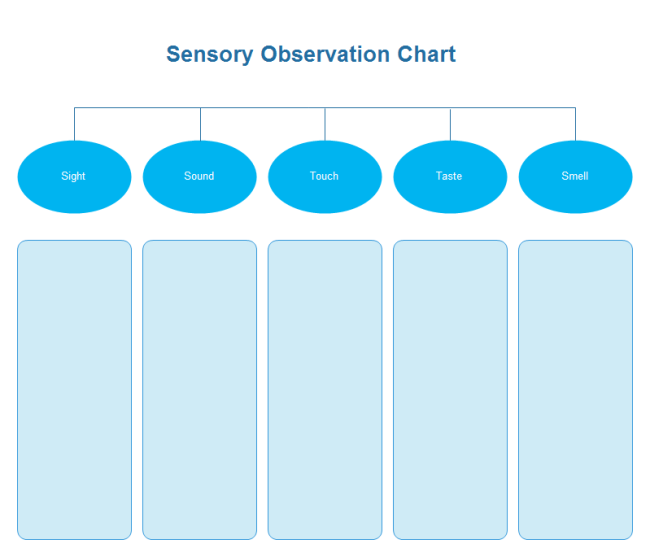
Sensory Details in Your Story by Connie Vines


Every writer knows how important sensory details are to a story.
Here is one way to keep track of those details that make your stories come alive for your readers.


Sight (the most utilized sense in writing; don’t forget the others!)

- flash of lights in the night sky
- deep blue of the ocean
- the roads had begun to glisten underneath headlights
- the sun was setting behind low, gray-blue storm clouds
- a heavenly hue to the layers of ice and snow accumulating on rooftops and tree limbs.
- her shadow shaky behind a slight flame stemming from a candle she carried
- sparks lit up the dusk of day
- a blinking red light from the truck’s turn-signal illuminated our darkened home

Sound

- The walls shook and vibrated like the tail of a rattle snake
- Ice crackled and pinged against the family room window
- Wind swirled around our beach house whistling loudly to a terrible tune
- The television buzzed as it shut off, and the furnace sighed one last time before the house
fell silent.
- The cracking of wood splitting punctuated each burst of fire like an exclamation point.
- the sounds of emergency sirens awakened the still roads
- the howling of wind and branches creaking under the weight of ice

Smell

- sweet aroma of baking corn bread
- cinnamon-scented candle
- pungent odor of smoke.
- salty beach air
- rotting leaves and crispness of air

Touch

- We sat still, huddled underneath the quilt
- Car tires gripped the ice with fearful intensity
- The power lines, heavy from the thickness of ice had snapped
- soft tufts of fur
- stick my toes in the warm and grainy sand

Taste

- ice-cold strawberries
- tall, frosted glass of sweet yet bitter lemonade
- salty chips
- juicy tartness of orange
- rancid butter

Think about your life experiences; good and bad..  The places you've lived. Your childhood.

See what you can do to add sensory details to your stories.

Happy Reading and Writing,

Connie 

Join in today's blog hop!  Stop by and see what these other  BLW authors are sharing!


http://triciamg.blogspot.com/

Sunday, October 02, 2016

Act as if What you do Makes a Difference #SundaySnippets

Act as if what you do makes a difference. It does.  -- William James

As writer I tend to think in scenes and storylines.  I know that every story makes two promises to the reader: an emotional one, and an intellectual one, since the function of a story is to make you feel and think.  However, there is also a beginning to each day, where I, as a human being, must function in the act of day-to-day living.

As part of this day-to-day living, I am very much aware of how actions, words, and attitude have either a negative or a positive effect on others.

Act as if what you do makes a difference.  It does.

In addition, if you are aware of Native American Culture, the Lakota know that what you choose to do at any given time, be it a good deed or an evil one, the consequences of that deed impacts seven generations.  Seven generations!

This is why in both my writing and my living, I try to take the high road.  I am not saying I always succeed, but I at least aim for the target.

 I also strive to keep my characters in check.  Even when my villains do truly terrible things (Sister Enid to Tay in Whisper upon the Water), I show motivation and life events so that the reader understands why this event took place; but I never paint the behavior as acceptable.

Beginnings to a story should give the reader a person to focus on, yet in your life's story: you are the main character.

Look at some of the beginnings in your own life.  What have you learned, what stories do you have to share?

Ummm. . .what have I learned?  I've learned that gators can run. . .very fast.  I learned that on a family vacation to a South Georgia swamp.  While that did not make a particularly wonderful life event (especially at the beginning of the day), but it will make a great scene in a novel or short story.

I also strove to set an example.
1.  I did not scream as I ran. I prayed that my sons would not witness their mother being chomped on by a bellowing alligator.
2. I explained that my actions (going down to the water's edge) weren't very wise.
3. We discussed what we might watch for so the event was not repeated.
4.  After we left the swamp we stopped at a local eatery for fried gator tail. Yes, not taking the high road here.  We called it 'regional food' and left it at that!

If you have a moment or two, please download my Rodeo Romance Series:
Lynx (contemporary romance), Brede (romantic suspense), or my YA novel, Whisper upon the Water. 

Also, visit my friends and wonderfully talents authors:
Connie Vines


 BOOKSWELOVE.COM


Sunday, September 25, 2016

Creating a (Not So) Perfect Western Hero by Connie Vines


How Exactly does a writer create a Western Hero?

I thought I'd look at Hollywood's current take on what it takes to be a Western Hero in today's Wild West!

Since I have just started streaming Season 5 of  Netfix's"Longmire" on my iPhone, I thought we could take a good long look at Walt.  (Now I watched the show when it was on t.v (A & E). However, missed Season 4,)


Walt Longmire 
Fictional Character/ as he appears in the Longmire (the mystery series in print).

Full name: Walter Longmire
Species: Human
Gende:r Male
Occupation: Sheriff
Title: Sheriff of Absaroka County, WY
Spouse(s) Martha Longmire (deceased)
Childre:n Cady Longmire (daughter, b. 4/1979)
Nationality: American
Police career: 
Department: Absaroka County Sheriff's Department
Years of service: 1972–Present
Rank: Sheriff

History

A native of Durant, Wyoming (the county seat of Absaroka County), Walt attended the University of Southern California, where he played offensive lineman for the USC Trojans and graduated in 1966 with a degree in English literature. He was then drafted by the Marine Corps and completed boot camp at Marine Corps Recruit Depot Parris Island and OCS at Marine Corps Base Quantico. He was assigned to the 1st Marine Division as a Military Police Officer, and served in country at Tan Son Nhut Air Base during the Vietnam War. He served in the Marines for four years, and earned, among other decorations, the Navy Cross, Silver Star, Bronze Star, and Purple Heart. After serving in Vietnam, Walt spent six weeks assigned as security at Johnston Atoll.

Upon his discharge from the Marines, Walt returned home to Wyoming where he was hired by Sheriff Lucian Connally as a deputy sheriff in 1972. Walt was elected as the Absaroka County Sheriff in November 1988 after Lucian all but threw the race and decided to retire.

Longmire as he appears in "Hollywood" screenplays:

Here is a Nextflix preview:


History

Absaroka County native Walt Longmire, born c. 1953, is the well-respected sheriff that resides there. When the series begins, it is believed by most that his wife, Martha Longmire, died of cancer.

His father was a rancher who managed the stables of Absaroka County's most wealthy family, the Van Blarcoms. He is a graduate of Durant High School Class of '81, and his football jersey still hangs in the school's trophy case.

In their 20s, he and Henry worked at Prudhoe Bay Oil Field in Alaska.

Walt has been the Sheriff of Absaroka County since at least 2005; his immediate predecessor is Sheriff Lucian Connally (Peter Weller), the uncle of Branch.

In 2010, Walt arrested Malachi Strand (Graham Greene), the Chief of the Cheyenne Reservation Tribal Police, for extortion; he also has an adversarial relationship with the current CRTP Chief, Mathias (Zahn McClarnon), although the two have a bond of mutual respect.

So what are the differences between the books and the TV series?

One of the key differences between the books and the TV series is the character's age and subsequent backstory. In the books, it is established that Walt is a college graduate and Vietnam War veteran, and has been the Absaroka County Sheriff since the early 1980s. However, no mention of college nor a military career has ever been specified or even alluded to on the show (although it hasn't been ruled out either), and Walt's age has been established multiple times, having graduated from high school in 1981 and having been friends with Henry since they were 12 years old, 38 years earlier.

In a significant departure from the books, Walt's wife Martha does not die from cancer. While she is still diagnosed with the disease, in the TV series she is murdered, the details of which are slowly revealed over several seasons, significantly affecting Walt's relation with his deputy Branch and the Connally family.

While the TV series portrays Vic as interested in Walt, her feelings aren't reciprocated like they are in the books. Instead, the TV series has Walt slowly recovering from losing his wife, unable or unwilling to maintain a relationship with a woman called Lizzie Ambrose, before finally showing enough interest in a member of the opposite sex to actively court Dr. Donna Sue Monaghan.

In the books, Absaroka County has seen five murders in 24 years. The TV series has seen 27 confirmed murders in the two first seasons alone.

In both the books and the TV series, Walt's friendship with Henry Standing Bear is significant but in the books Standing Bear is a person of physical strength, good judgement and moral character. In the TV show he is written to be  of great moral character but with more attitude than substance.

Personally, I find Longmire (Hollywood version) has become more of a believable hero from Season 1.  During the 1st Season he see to be a Western version of NCIS "Gibbs" complete with hating his cell phone and refusing to use it even in an emergency.  I've vacationed in Wyoming and an wonder where those cell towers are in 'Walt's World" especially during winter snow storms.

I would also like to see Henry Standing Bear be shown as a person rather than a "walk-on Native".

What do you think?  Does Longmire seem like the perfect Western Hero?

The Western hero is the possessor of physical strength, stamina, and an innate sense of the right thing to do; he rejects eloquence, refinement, and superior intelligence as standards of measure.

Yes. Walt fits the standard.  However, I'd wish that Hollywood would have let Longmire keeph is original backstory (change to Gulf War).  Having the retired high school football jersey bring to mind Al Bundy (Married with Children), not a Sheriff with a wealth of life experience and education to draw upon.

Still, the Wyoming country-side, and Robert Taylor are easy on the eyes.

Connie

Remember to stop at by and see what everyone else is talking about today!


Saturday, September 24, 2016

What Eccentric Writing Habits Have I Never Mentioned? By Connie Vines

Most authors, of course, have personal eccentric writing practices. Fueled, no doubt by his or her
personal muse.  Agatha Christie munched on apples in the bathtub while pondering murder plots, Flannery O’Connor crunched vanilla wafers, and Vladimir Nabokov fueled his “prefatory glow” with molasses.

Then there was the color-coding of the muses:  Alexandre Dumas, for decades, he penned all of his fiction on a particular shade of blue paper, his poetry on yellow, and his articles on pink; on one occasion, while traveling in Europe, he ran out of his precious blue paper and was forced to write on a cream-colored pad, which he was convinced made his fiction suffer. Charles Dickens was partial to blue ink, but not for superstitious reasons — because it dried faster than other colors, it allowed him to pen his fiction and letters without the drudgery of blotting. Virginia Woolf used different-colored inks in her pens — greens, blues, and purples. Purple was her favorite, reserved for letters (including her love letters to Vita Sackville-West, diary entries, and manuscript drafts. Lewis Carroll also preferred purple ink, but for much more pragmatic reasons: During his years teaching mathematics at Oxford, teachers were expected to use purple ink to correct students’ work — a habit that carried over to Carroll’s fiction.

So how do my little eccentric (or never before mentioned) writing practices measure up?  Is my personal muse quirky, dull, or out of control?

Since my quirks are normal for me, I had to think about this for a bit.


I always drink coffee that is part of my current ‘setting’.  When my setting is New Orleans I mail order my coffee from my favorite spot.

Café du Monde.  I have my cup and saucer, and a portable mug when I writing outdoors.   I have a blue coffee pot and matching tin cup when I writing westerns (yes, the coffee is VERY strong and black).  And of course, a Starbuck cup or a Disneyland mug when my novels take place in So.Cal.


My music and my menu planning also is linked to my settings.  All within the range of normal.  Though I have more than my fair share of coffee mugs and cups.


I listen to diction videos on YouTube so that I am not relying on my memory for the sound of a Cajun accent, Texan’s drawl, etc.

I visit areas on Google Earth and Zillow.  Even if I have lived or vacationed there, I may have forgotten an interesting ‘something’ I can insert into dialogue, or find a way to describe a scene.

I talk to myself.  Or not simple little sentences.  I’m talking about a two- way conversation: “Do you think that might work?”  “No.  No one is that stupid!”  “How about. . .”  This is the time my husband walks by to find out who’s on the phone, or if I’m asking him a question.  The dog even pokes her head in to see what’s going on.  I’m thinking this is a bit outside of the ‘normal’ range.

When I write I have to make certain my work space in in perfect order.  I have colored folders/pens/notebooks that match and are exclusive to the story I’m working on at the moment.

I never enroll in an online class when I’m writing—it’s guaranteed writers’ block.  I never talk about my WIP because I mentally clock that as writing time and lose interest in the story before it’s completed.

Whatever story I’m am working on is my favorite.

I survive on 3 hours sleep when I am deep in a story.  I know I drink coffee, but seem to run the story in my mind when I sleep too.

I also pick up the quirks of my heroines.  I have several friends who are in theater and said it’s a bit like ‘method acting’. Fortunately, I’m back to my state of normal a couple of weeks after typing THE END.

I think all of this part of a writer’s voice.  It is what we, as readers, look for in a story.  Hopefully, it is what my readers, enjoy about the novels, short-stories and novellas that I write too.

Happy Reading!

Connie

Please stop by and visit every one participating in this months’ Round Robin Blog Hop:

Skye Taylor http://www.skye-writer.com/blogging_by_the_sea
A.J. Maguire  http://ajmaguire.wordpress.com/
Beverley Bateman http://beverleybateman.blogspot.ca/
Dr. Bob Rich https://bobrich18.wordpress.com/2016/09/24/is-my-writing-right-for-you
Rachael Kosinski http://rachaelkosinski.weebly.com/
Anne Stenhouse  http://annestenhousenovelist.wordpress.com/
Helena Fairfax http://www.helenafairfax.com
Victoria Chatham http://victoriachatham.blogspot.ca
Margaret Fieland http://margaretfieland.wordpress.com
Rhobin Courtright http://www.rhobinleecourtright.com


Sunday, September 18, 2016

Sunday Snippets: Topic: Villain(s) 9/18/2016

A change of pace this Sunday this Sunday.  Instead of a snippets from my featured novel, "Brede".
I thought I post a writing topic.

One of the most important characters in a story, the person we love to hate.  The 'villain'.


Villian
noun
1.
a cruelly malicious person who is involved in or devoted towickedness or crime; 
scoundrel.
2.
a character in a play, novel, or the like, who constitutes an important evil agency 
in the plot.

My personal faves (if you can label a villain as such): 

White Witch from "The Lion, the Witch and the Wardrobe" by C. S. Lewis
The White Witch is a beautiful, proud, and cruel villain who has made herself Queen of Narnia against the wishes of all who live there. It is because of her that it has been always winter and never Christmas for the last 100 years. If anyone tries to rebel against her, they are sure to be found and captured by her spies, at which point the rebel will be imprisoned or turned to stone. She is also the witch who wages war against Peter, Lucy, and their Narnian army.  (She still frightens me).
Jane Eyre was really is like a Cinderella story in some ways, with plenty of villainy for our heroine to cope with as she proves herself a princess.  (Skillfully written, this novel is a favorite of mine).
Darth Vader, Star Wars. The Wicked Witch of the West. The Wizard of Oz.
Do I write these type of villains?  
No. ( I wouldn't be able to sleep at night.). Usually, villains in my novels are people who did not start out as evil; if the villain is evil, she/ he is mostly off stage (remember Meerkat Manor gives me nightmares).
In my YA novel, Whisper upon the Water, Sister Enid, did a great deal of good before her focus changed.  Since this was a YA novel (Dream Real Award Winner, National Book Award Nominee, and Frankfurt eBook Finalist), which deals with Native American issues, I was careful not to make the evil a racial focus.  Instead, Sister Enid and the circumstances where a product of the times: ignorance and fear, which became hatred.
The Purpose of Villains.
In my opinion,the villain can be worth more than the hero. I say this because the villain, or antagonist, serves many purposes. In his or her simplest form, the villain is a foil to the protagonist. The values and goals of the hero are contrasted and challenged by the villain. 

The villain and the hero both play different roles in the plot. While the villain initiates and develops the conflict, the hero finds the solution.  In many novels and stories, the villain is far more complex than the hero. What led them to choose his or her path?  A hero may have "greatness thrust upon him," but a villain leads a life of isolation. What I mean to say is that no matter how difficult it gets for the hero on his or her journey, Good will always be there for support. In contrast, the villain chooses Evil —a path he or she will walk alone. 

The antagonist and villain figures of fiction and real life teach us more about ourselves than the hero. In the villain we identify our best and worst qualities by either disagreeing with the villain's actions or attempting to comprehend the vile deeds he or she commits. 

It must be emphasized that heroes and villains are interchangeable and far from black and white, but in their most stereotyped forms, they contrast. A hero may struggle, but his or her values are strong and unwavering. A villain, like Darth Vader, may switch to the Good side. 

Villains provide fiction with entertainment, plot and philosophical depth. In many ways, it is the villain that defines the hero - chooses him. 

Happy Reading,
Connie 


Please visit the other wonderful writers who participate in our weekly blog hop:

Saturday, September 03, 2016

Sunday Snips & Stuff

stars
Oh, Mercury retrograde. You are here, AGAIN. You have arrived on our collective doorsteps in all your messy glory. 
If you have no idea what I’m talking about, here we go. The planets are swinging around at all times, and their movements affect us all in different ways. All planets go retrograde, but Mercury’s journey seems to impact people much more than any other. (Even people who “don’t believe in astrology” often “believe” in the crazy aftershocks of Mercury retrograde!)
Why is that? It’s because Mercury rules communication, clear thinking, truth and travel, so when the planet goes retrograde — which means that it looks like it’s going backwards in the sky — all those things go backwards. They start to get ugly and tangle up. Mercury isn’t really going backwards, it’s just hanging out by the sun, but from Earth, that makes it look like it’s in reverse. It typically runs for a couple of weeks, a few times a year.
Check out these dates below and put them in your calendar!
In 2016, Mercury is retrograde from…
January 5th to January 25th
April 28th to May 22nd
August 30th to September 22nd
December 19th to January 28th (2017)
Note: We sometimes start to feel the effects of Mercury retrograde a few days early. It’s nice to give yourself a bit of leeway on either side of the prescribed dates!
WHAT HAPPENS WHEN MERCURY GOES RETROGRADE?
All sorts of things! It’s like everyone you know has suddenly gone mad! You might find yourself getting into bizarre arguments about nothing at all, being unable to finish sentences or barely even able to form a coherent thought. Your computer and other electronic equipment is more likely to go on the fritz. You could experience travel delays, too. Double-check your flights and take a book with you to keep you occupied while you wait for the train! We don’t tend to get all the information we need at this time, so it can be hard to make big decisions and it’s not always the best time to sign a contract, either.
Expect to hear super-loud complaining from your friends who are Gemini (me!) or Virgo, since both are ruled by Mercury! Mercury also rules a lot of industries like publishing, writing, editing, advertising, sales, public relations and anything to do with transport, like airlines, the post office and cabs! This means it can be particularly rough for Gemini train conductors and Virgo magazine editors, so be kind to any you know!
I often find that Mercury retrograde makes me want to go into hermit mode. I feel like half my brain is missing so I’m really not that interested in interacting with anyone, plus every conversation seems to go in an unusual, confusing direction. I feel much more irritable and frustrated and things just don’t seem to go how I want them to.
So that’s the bad news. Mercury retrograde can be a total kick in the teeth for those of us who normally pride ourselves on having our karmic shit together! The GOOD news is that Mercury retrograde provides us with lots of beautiful opportunities if we can just tilt our head and squint.
Mercury retrograde wants us to move back spiritually. It is providing us with a chance to re-examine various areas of our life which may need a little more work, so that we can move forward to a bright new dawn. Now, more than ever, the time is right to look at things with clear eyes. 
It’s also a terrific period in which to tie up loose ends. So many of us have unfinished projects… Maybe that door just needs another lick of paint, or you’ll decide to put away your ex-boyfriend’s love letters once and for all. 
One of the best ways to cope with it — as with anything, really — is to just “go with the flow”. When you fight Mercury retrograde, that’s when life gets really ugly. Just take some time, go slowly, be careful, don’t freak yourself out by expecting to be uber-productive-perfect right now. Be good to yourself and the people around you, now more than ever!
A QUICK GUIDE TO

SURVIVING MERCURY RETROGRADE!
 Be sure not to take things too personally. People will often say offensive things they didn’t mean around this time, because their thinking is clouded and their communication skills are on pause! If your best friend suddenly became the most insensitive person in the world, give her the benefit of the doubt.
 Back up your data!
 Don’t purchase any big ticket items, because they will often have flaws or issues that you weren’t aware of! Of course, life doesn’t stop just because of wacky planetary movement, so if you absolutely have to get that car, computer or iPhone, TRIPLE-check all the paperwork, and make sure you have a warranty!
 Take things with a grain of salt. Everyone is a bit confused, and people are much more inclined to change their mind once Mercury goes direct. Mercury can be a bit of a trickster — could it be that the next few weeks are a big karmic joke?!
 Read the small print on any contracts. Ask lots of questions. Again, you can’t put your life on hold just because of some silly planet, but adapt your lifestyle a bit so that things run more smoothly. Communication can be a mess right now, but do your best to get as much information as you can.
 Finish things you started a while ago. Home improvement projects? Wardrobe re-organisation? Short stories? Love affairs?! This is an excellent time to tie up loose ends and file things away forever.
 Get together with old friends, reminisce and laugh!
 Double-check any information you’re given, especially as relates to travel arrangements! During one particularly formidable Mercury retrograde, I actually caught a cab to the wrong airport! Check times, delays, baggage allowances, reservations… everything!
 Allow Mercury to nudge you in unusual directions. If you seem to find yourself “back to the future”, don’t just try to wriggle out of it — look at what the universe is trying to show you. What can you learn from this situation? This is a fantastic time to re-examine, accept and move on.
 Use the things you’ve discovered in the past to create a dazzling new vision so that you’re ready to blast ahead when Mercury goes direct!
See you next Sunday!
Please stop by and visit the members of our weekly blog hop!
Connie


Sunday, August 28, 2016

Sunday Snippets by Connie Vines #sundaysnips&stuff

It's another beautiful Sunday morning.  


Today I'd like to share another  snippet from my Rodeo Romance, "Lynx".

Page 51:

Blinking irritably at the heavy, burning sensation in his eyes, compliments of a sleepless night invaded by erotic dreams of Rachel, Lynx crawled from bed the following morning and staggered to the rear of the camper.  He managed to perk a strong pot of coffee before peering into the refrigerator.  A quart of milk with an expiration date of six days past, a mummified tomato, and a cardboard container holding a two-day old hamburger stared back at him.  The heavy scent of bacon, pancakes, and eggs from next door provoked a rumble of hunger from his stomach.  He needed food.  It only went to reason, Running Springs, being a small town, possessed one cafe--"The Round-Up" where Rachel worked.

With a resigned shrug, Lynx showered, shaved, and got dressed.

Lynx stopped short when he walked across the threshold of the cafe, his gaze riveted to the woman whose image had kept him up all night--Rachel.

He felt like hell, and he looked like hell, and to compound his ire, she sat at the end of the counter looking refreshed.  At five in the morning, she should have looked a little haggard!

Her silky hair was pinned at the nape of her neck in some type of complicated braid.  
She looked up at him when the bell over the door jingled, and she managed a smile.  "Good morning," she said cheerfully, rising to her feet.  

To read more of "Lynx" or "Brede" Rodeo Romance, Book 2.  Click on the book covers, or visit my website:  www.novelsbyconnievines.com

download now at Amazon.com


Please stop by and read the Sunday Snippets of the authors participating in our weekly Blog Hop, too!

Happy Reading,

Connie


http://triciamg.blogspot.com/
http://yesterrdayrevisitedhere.blogspot.com/
http://mizging.blogspot.com/

Snippets for Brede next week!